General information, not legal or technical advice. Facts as of 4 November 2026. Sources are listed at the end.
Not every acid is hit the same way
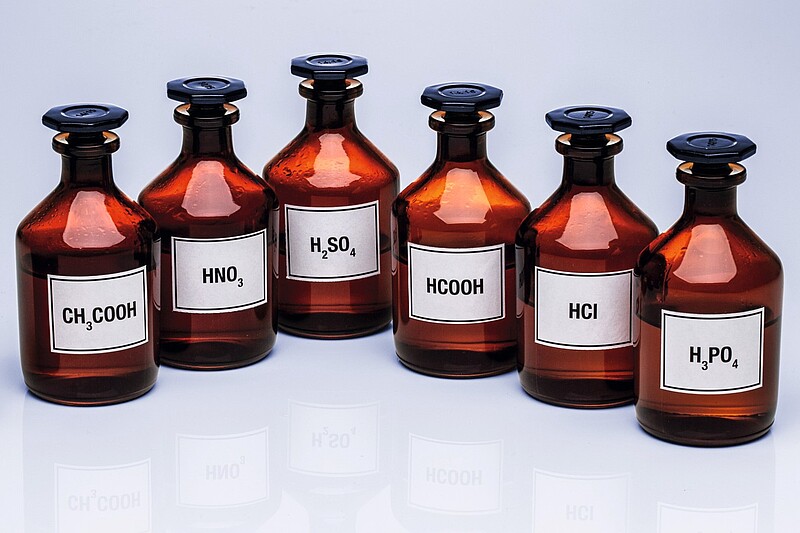
- Phosphoric acid: directly exposed. Most of it is made by treating phosphate rock with sulfuric acid; its production used about 37.7 million tonnes of sulfur in 2024 (CRU). Fertilizer producers have cut output, and producers in Egypt, Brazil and India are reported to be among them.
- Nitric acid: mixed signals. It is made from ammonia, not sulfur, so the link is indirect, through ammonia and energy costs. US prices rose 12% in March 2026 (ChemAnalyst), yet a May market report described comfortable supply and weak demand in places (IMARC).
- Hydrochloric acid: no clear link. We found no reliable reports of a Hormuz-related shortage. Local conditions and freight still apply, so check with your supplier.
Seven steps for buyers
- State exactly what you need. Concentration, grade, impurity limits, quantity, packing and delivery place. A precise request gets a usable answer, and acid from different sources can differ in impurities. Ask for a certificate of analysis.
- Know your source. Ask where the acid is made and how it reaches you. Sources relying on sulfur shipped through the strait, or on countries with export restrictions, carry more risk.
- Keep a second source qualified. Test and approve an alternative before you need it.
- Review your stock and storage. Hold what your storage allows safely. Acid needs suitable tanks and materials, and stock has a real cost.
- Plan for dangerous goods rules. Sulfuric (UN 1830), nitric (UN 2031), hydrochloric (UN 1789) and phosphoric acid (UN 1805) are class 8 corrosives. Check carrier acceptance, packing and the safety data sheet early, for every port and truck on the route.
- Read your contract. A government export ban or a blockade may fall under force majeure wording, but it depends on the clause (Akin). Agree price adjustment, delivery periods and alternative sources in writing, with legal advice.
- Do not substitute one acid for another without technical checks. Replacing an acid in a process can affect the product, equipment and safety. Ask your process engineer first.
MADAR's group produces industrial chemicals in its own plants, with nearly 30 years of experience in industry. For a specific acid, send us your requirement: grade, quantity, packing and destination. We confirm availability, price and delivery in writing. For a first idea of freight, including dangerous goods, try the cost estimator.
Sources
- Global Agriculture, "Sulphur Prices Ease, but Hormuz Keeps Supply Tight", 24 September 2026 (citing CRU)
- Financial Times, "Fertiliser groups cut production as Iran war squeezes sulphur supplies", May 2026
- ChemAnalyst, "US Nitric Acid Prices Increase 12% as Demand-Pull Forces Dominate Market", 2026
- IMARC Group, "Nitric Acid Prices 2026", May 2026 update
- Akin, "When Supply Chains Break: Force Majeure, Hardship and the Sulfuric Acid Crisis", 2026