The Port of Salalah lies in Dhofar on the Arabian Sea, close to the main shipping lane between Asia and Europe and outside the Strait of Hormuz. Its container terminal is one of the most efficient in the world, and its general cargo terminal serves the minerals, chemicals and food trades of southern Oman.
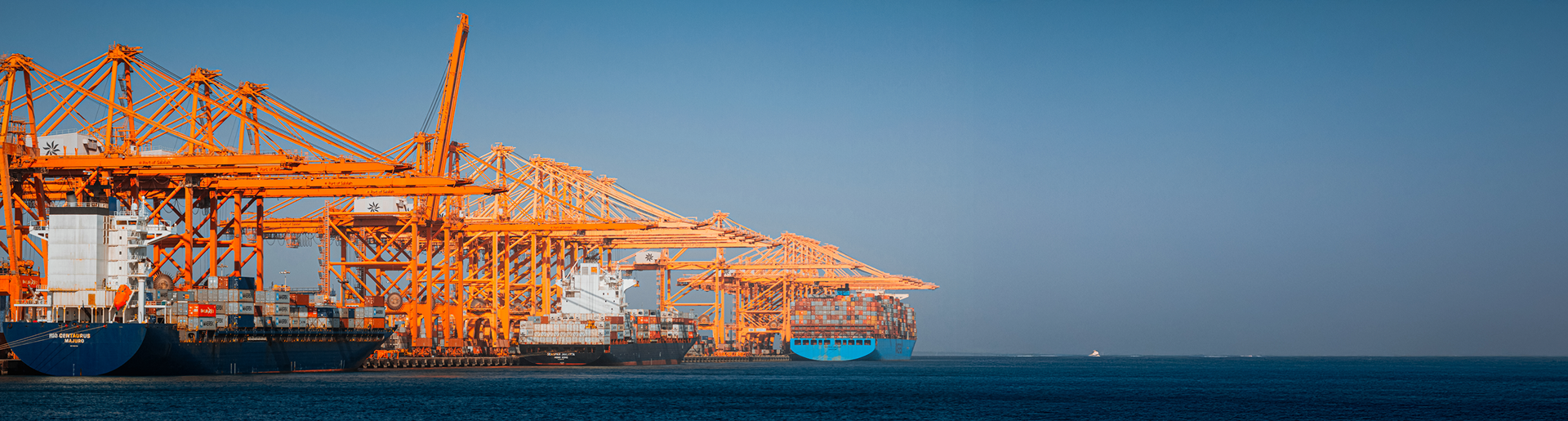
Salalah lies in Dhofar on the Arabian Sea, close to the main shipping lane between Asia and Europe and outside the Strait of Hormuz.
Two terminals: a deep-water container terminal for the world’s largest ships, and a general cargo terminal for bulk, liquids and breakbulk.
Boxes moved between mainline vessels and feeder services to East Africa, the Red Sea, the Gulf and South Asia.
Import and export boxes for Dhofar, southern Oman and onward road cargo.
Food and perishables; the 2025 expansion added 2,000 reefer plugs.
Gypsum and limestone exports from Dhofar lead the general cargo terminal.
Methanol, ammonia and LPG from the plants in Salalah Free Zone.
Livestock, food and breakbulk for the south of the country.
Salalah is the export door for southern Oman’s minerals and chemicals: gypsum, limestone, methanol, ammonia and LPG. Salalah Free Zone, next to the port, hosts chemical production and food and logistics businesses. For importers, its transshipment links put East Africa, the Red Sea and South Asia within short feeder voyages.
Container and general cargo figures for 2024 and 2025: Port of Salalah, reported by WAM and Hellenic Shipping News (2026).
Capacity, expansion and reefer plugs: The Business Year, 2025.
Container Port Performance Index 2023: World Bank / S&P Global Market Intelligence.
Figures change every year. Check the port operator's latest report before pricing or planning a shipment.
Tell us the product, quantity and destination. The next step opens the enquiry form with these details filled in.